

Design in Malibu
Twenty-one miles of coast where the construction rate is the least interesting number in the budget. Here, entitlement decides whether a project happens at all.
Entitlement, then architecture.
Malibu is an independent city administering its own local coastal programme, which makes it unlike almost anywhere else we work. The question on a Malibu parcel is rarely what a house costs per square foot. It is whether, and in what form, the house can be approved.
Three things dominate. Coastal permitting - depending on where a parcel sits, a coastal development permit may be required, the decision may fall in an appeal zone, and environmentally sensitive habitat or bluff conditions may constrain the buildable envelope. Onsite wastewater - much of the city is not on sewer, so a treatment system with its own engineering, testing, siting and approval is part of the project and constrains the footprint. And geology - bluff retreat, landslide history, canyon drainage and slope stability can change what is buildable rather than merely what it costs.
Above all of it sits fire. Malibu is a Very High Fire Hazard Severity Zone with narrow canyon access, water supply requirements for firefighting, and defensible-space obligations that shape the landscape as much as the architecture. We design against all of this from feasibility, because on a Malibu parcel the honest answer is sometimes that the project you have in mind is not the project the site will carry.
What actually decides a Malibu project.
These four determine feasibility, not finish. Confirm current requirements with the City of Malibu and the relevant coastal authority before relying on any of them.
Coastal review is the schedule
Where a coastal development permit is required, the path can be long, and where a parcel falls in an appeal zone the decision may not be final at the local level. Environmentally sensitive habitat designations and bluff setbacks can reduce the buildable envelope substantially. The range owners are typically not told about up front is measured in many months to years, and the carrying cost over that period frequently exceeds the entire design fee.
No sewer means wastewater is part of the architecture
Much of Malibu relies on onsite wastewater treatment, which brings percolation testing, system engineering, siting and approval - and consumes land. The system's location interacts with the house footprint, the driveway, the pool and the planting, so it belongs in the site plan from the first sketch rather than being accommodated afterwards.
Geology can change what is buildable, not just what it costs
Bluff retreat on the ocean side, landslide history in several areas, canyon drainage and general slope stability all drive geotechnical investigation. Unlike most constraints, the findings here can remove options entirely. The investigation should precede the design commitment, and on a difficult parcel it should precede the purchase.
Fire shapes the house and the landscape together
Very High Fire Hazard Severity Zone construction, defensible space, firefighting water supply and emergency access on narrow canyon roads all attach requirements. They interact directly with the deep eaves, timber and planting that the Malibu aesthetic wants, which is a design problem best solved in the model rather than after a correction notice.
Coastal work, resolved before the build.
Representative projects from our coastal practice - the scope and standard a Malibu engagement carries.
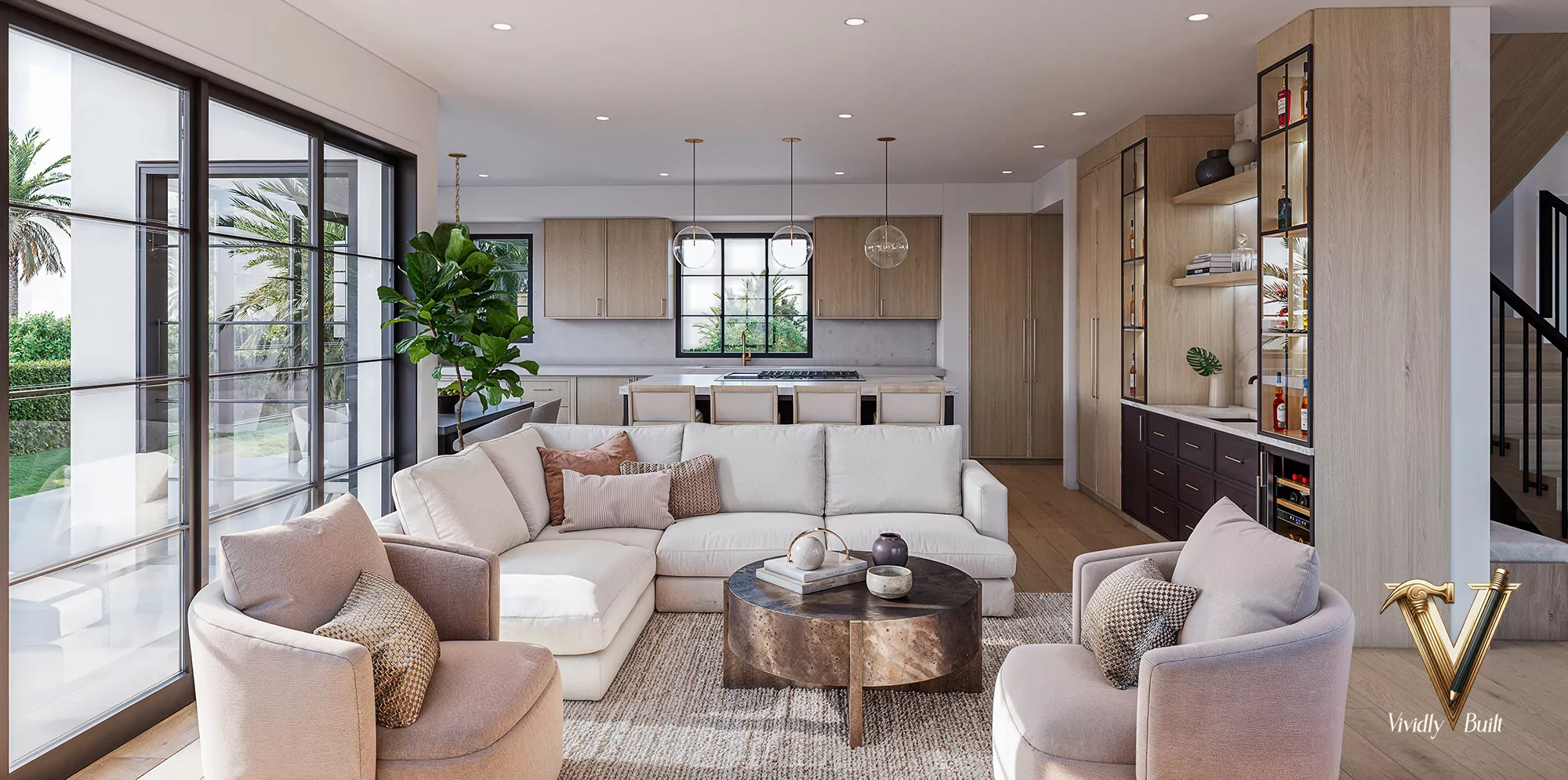
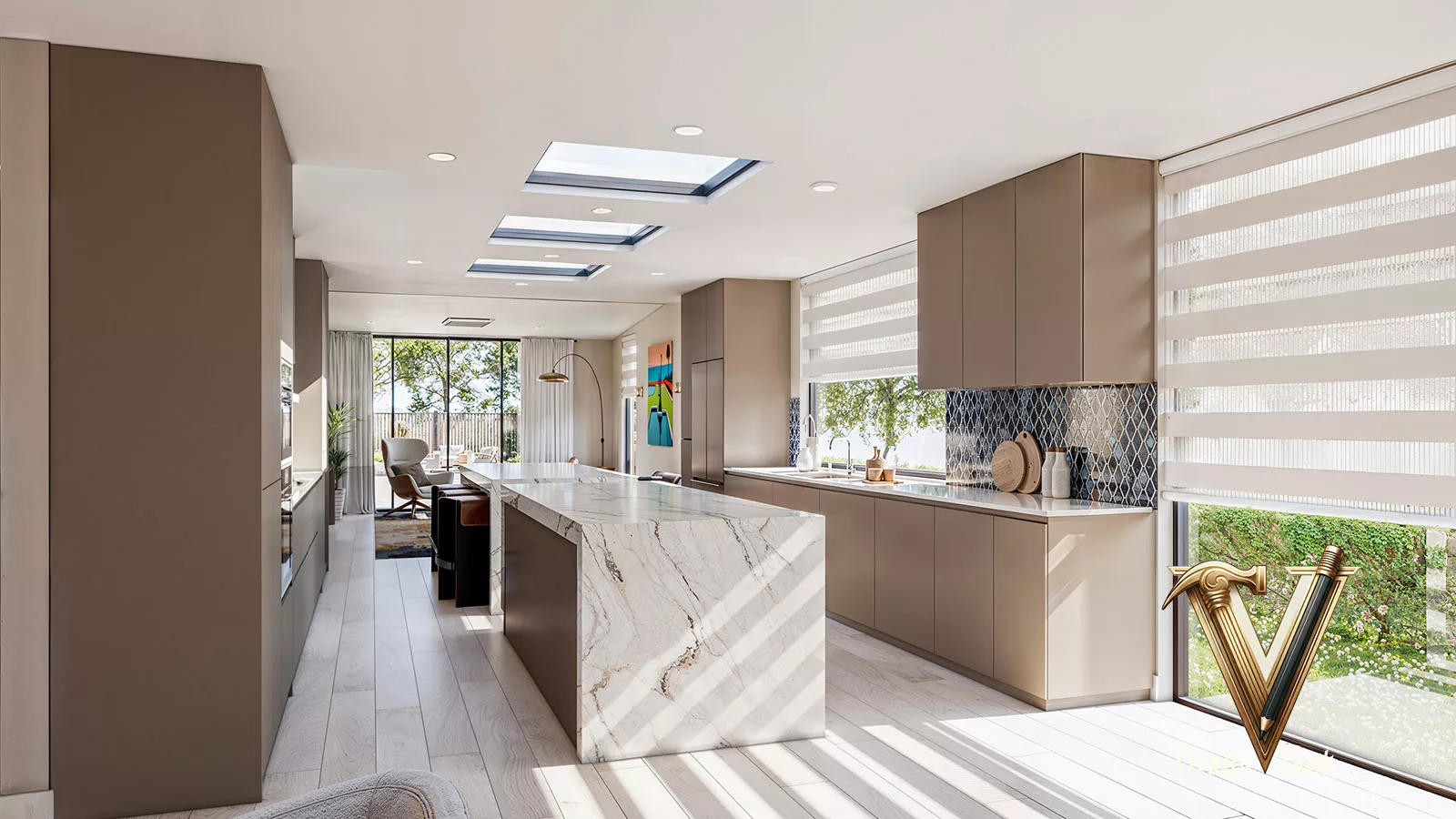
Where we work nearby. We design along the coast and over the hills - Pacific Palisades, Santa Monica, Calabasas and Westlake Village.
What we design in Malibu.
Vividly Built provides home design, interior design and photoreal visualization as one service, across residential and commercial categories in Malibu and the surrounding submarket.
Common questions about designing in Malibu.
How long does a Malibu coastal permit take?
Longer than most owners are told. It depends on where the parcel sits, whether an appeal zone applies, and whether habitat or bluff constraints are in play, and the realistic range runs from many months into years on difficult parcels. We cover the mechanics in our coastal permit guide. The practical point is that carrying cost over that period is often the largest single line in the budget.
Do I need a septic or wastewater system?
In much of Malibu, yes - large parts of the city are not on sewer. That means percolation testing, system engineering, siting and approval, and it consumes land that interacts with the house, the driveway, the pool and the planting. It belongs in the site plan from the outset rather than being fitted in later.
Can you tell me whether a Malibu lot is buildable before I buy it?
We can tell you what decides it and run a feasibility study that answers most of it - zoning, coastal status and appeal exposure, habitat and bluff indications, slope and geology, wastewater viability, access and fire requirements. On a constrained parcel that study is the best money in the project, because the answer is sometimes no.
Why is Malibu more expensive than the per-square-foot figure suggests?
Because construction is often the smaller half of the problem. Entitlement duration, geotechnical response, onsite wastewater and access requirements can add a multiple of any rate difference, and the carrying cost of a long approval is frequently the biggest line of all.
What does a bluff setback mean for my design?
Where bluff conditions apply, a setback from the bluff edge is required to account for erosion over the structure's life, and it can reduce the buildable area significantly - sometimes to the point of changing what kind of house is possible. It is parcel-specific and needs establishing early, not assumed from a neighbour's precedent.
Is rebuilding after a fire different in Malibu?
The insurance and debris sequence is the same as elsewhere, but the entitlement picture is not - coastal status, habitat, bluff and wastewater all still apply, and like-for-like rebuild provisions interact with them. Our fire rebuild resource centre sets out the general order of operations.
Do you design the landscape as well?
Yes, and in Malibu we would argue you cannot separate them. Defensible space, the wastewater system, drainage, habitat constraints and bluff setbacks all sit at the intersection of architecture and landscape. One model is how you avoid designing a pool where a leach field has to go.
A Malibu project, tested before it is designed.
Send the address. We will run feasibility against coastal status, geology, wastewater and access first - and tell you honestly if the site will not carry what you want.