
Design in Coronado
A small island city with a deep stock of early houses, compact lots, and more review layers than its size suggests.
Small island, several rulebooks.
Coronado is an independent city occupying a peninsula across the bay from downtown San Diego, and for a place of its size it carries an unusual number of constraints on what you may build.
The first is history. The Village contains a dense concentration of houses from the late nineteenth and early twentieth centuries, and the city maintains a historic resource framework. A great many properties are either designated, potentially eligible, or old enough to trigger review when demolition or significant alteration is proposed. Owners regularly discover their house's status only when they propose to change it, which is the most expensive possible moment to find out.
The second is dimension. Lots in the Village are compact, height is limited, and coverage and setbacks are applied tightly - so the design problem is organisation rather than expansion. The third is less obvious: the island hosts a naval air facility, and airspace height considerations apply across parts of it, adding a constraint most owners have never encountered. And coastal status applies as well.
What an owner here needs to establish first.
These four decide most Coronado projects, and the first is the one that catches people. Confirm current standards with the City of Coronado before relying on any of them.
Establish historic status before you plan anything
The Village's housing stock is old enough that a large share of properties are designated, potentially eligible, or subject to review on the basis of age when demolition or significant alteration is proposed. That review engages with materials, proportion, window pattern and how an addition reads against the original. Finding out after a design is developed means redoing it, so this is the first call to make.
Compact lots make this an organisation problem
With tight coverage, setbacks and height limits, the way to a better house is rarely a bigger footprint. It is reworking circulation, using roof volume where permitted, reconsidering where the living space sits, and handling daylight properly in a plan that cannot spread. These decisions are made in section and are best walked at full scale rather than drawn flat.
Airspace constraints are real and frequently unknown
The naval air facility on the island means height considerations related to airspace apply across parts of Coronado, in addition to the city's own height limits. Most owners have never encountered this and it is not something to assume away. Confirm whether and how it affects your parcel during feasibility.
Additions succeed when they are subordinate and legible
On a historic or contributing property the workable approach is new floor area at the rear, set down from the principal mass, matched in material and proportion and readable as new rather than imitative. That is both the likelier approval and, generally, the better building - a convincing original with an honest addition rather than an enlarged pastiche.
Work on houses with history.
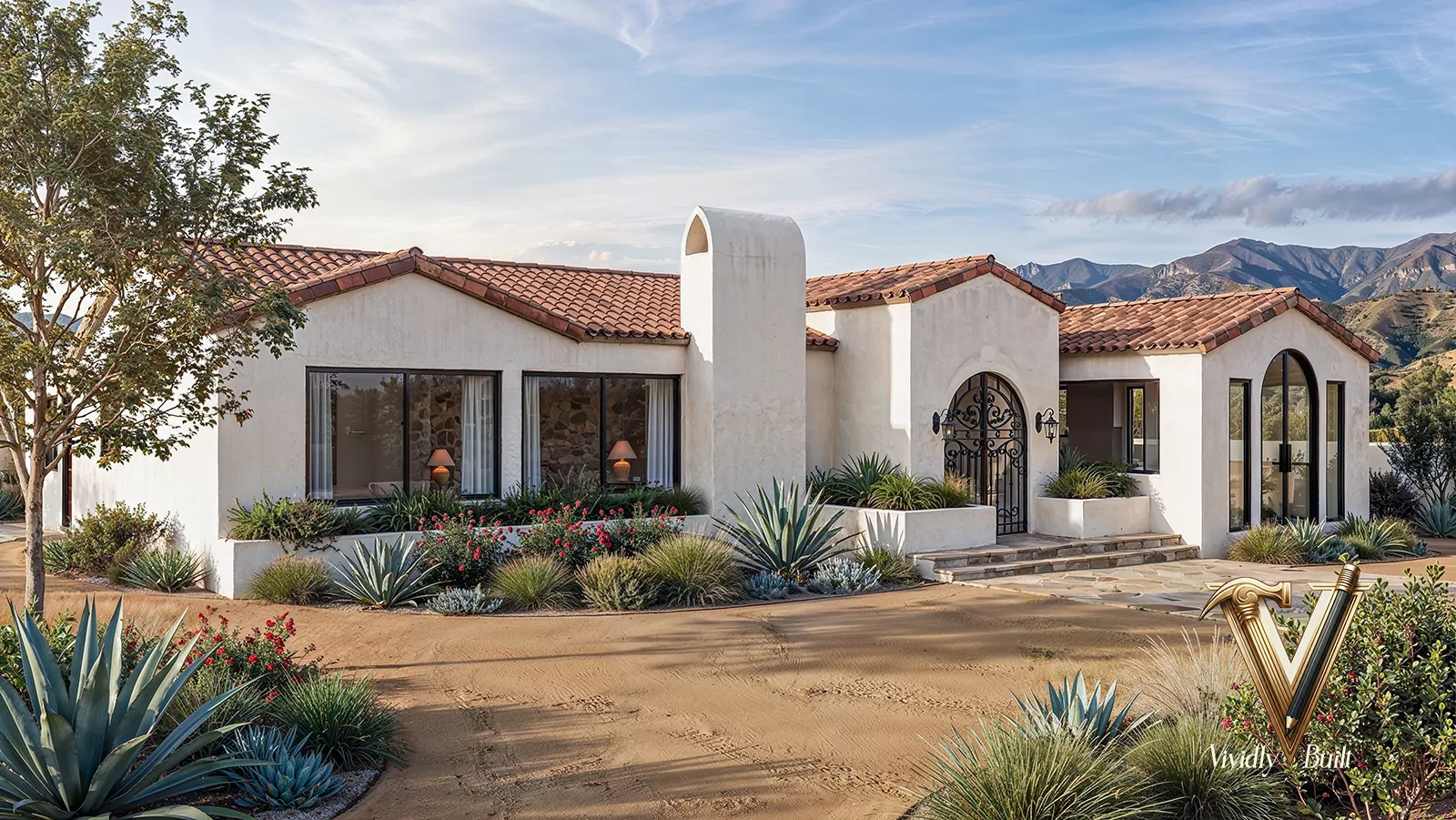
Representative projects from our practice, including remodels where the existing building's character was the starting point rather than an obstacle.

Where we work nearby. We design across San Diego and the coast - Point Loma, La Jolla and Del Mar.
What we design in Coronado.
Vividly Built provides home design, interior design and photoreal visualization as one service, across residential and commercial categories in Coronado and the surrounding submarket.
Common questions about designing in Coronado.
How do I know if my Coronado house is historic?
The city maintains a historic resource framework, and given the age of much of the Village stock a great many properties are designated, potentially eligible, or subject to review on age grounds when alteration or demolition is proposed. Because status governs what may change, establishing it is the first step - before a brief, not after a design.
Can I demolish and rebuild in the Village?
It depends heavily on the property's status and age. Where historic review applies, demolition is a difficult proposition and the productive path is usually retention with a well-handled addition. Where it does not, current height, coverage and setback limits govern - and they may not permit what is standing. Either way, establish the position before committing.
What are the airspace height restrictions?
The naval air facility on the island means airspace-related height considerations apply across parts of Coronado, alongside the city's own height limits. It is not something most owners expect, and whether and how it affects a particular parcel should be confirmed during feasibility rather than assumed.
How do I get more space on a small Village lot?
Generally by reorganising rather than expanding - reworking circulation, reconsidering which level the living space occupies, using roof volume where permitted, and handling daylight properly in a plan that cannot spread sideways. Those strategies tend to go further here than chasing footprint.
Do I need a coastal permit?
Coastal status applies across the city, so a coastal development permit may be required alongside the city's process. It is worth confirming at feasibility because it sits on the critical path.
Is construction harder on the island?
Logistically, yes. Access is via the bridge or the strand, staging space is limited on compact lots, and that affects delivery scheduling, equipment size and cost. Builders who work here regularly price it in; it is also worth reflecting in design decisions about component sizes.
Can I work in a contemporary style?
On non-historic properties, and in parts of the city away from the Village's older fabric, yes. Within the historic context, contemporary work succeeds when it is handled as a legible, subordinate addition to a retained original rather than as a replacement of it.
A Coronado project, started with the right question.
Send the address. We will establish historic status, height and airspace constraints before anything else - because on this island those three decide what the project can be.